
Baby Reflux & Pediatric Chiropractic
Pediatric Chiropractic Care is a gentle, holistic way to support newborns and infants in healing reflux and symptoms often associated such as fussiness and disturbances in sleep.

As a new parent, have you ever found yourself exhausting all avenues to find the root cause of what is causing your little one to frequently spit up after feedings or randomly throughout the day? You are not alone. Reflux and colic are two of the most common reasons why people seek out chiropractic care to help their little one’s digestive system function properly.
Our spine has a direct correlation to the nervous system in which has a connection to the digestive system. Misalignments in the spine can impact the efficiency of nervous system which often can be often indicate the need for chiropractic care. There are many reasons that a baby may experience nervous system interference resulting in reflux. While it may be frustrating in new parents-- there is hope! Many parents have been right where you are and have seen success in nervous system focused chiropractic care helping decrease reflux or spit up in their littles.
Dr Sura has successfully supported families and cared for newborns and babies with holistic pediatric care and abdominal therapy. Parents are relieved to see how gentle and soothing the care is and how effective chiropractic is in helping their baby heal and resolve the reflux and/or digestive stress. In addition, Dr Sura teaches parents techniques to help support your baby at home with gentle abdominal massage and some other things you can try to help your baby be more comfortable, and some things that may help you be more comfortable, too.
“Not knowing the root cause of your baby’s distress and how to relieve the pain is one of the most stressful experiences a new parent may have.”
Pediatric Chiropractic Care: Safe & Effective for Babies with Reflux
Over the years a number of studies have looked into the effectiveness of chiropractic care for babies with reflux. These studies overwhelmingly suggest that pediatric chiropractic care is a safe and effective for newborns and infants.
In one case study, a three month old baby was struggling with symptoms associated with gastroesophageal reflux disease, fussiness, irritability with sleep disorder syndrome and irritable infant syndrome of musculoskeletal origin. Her symptoms included frequently interrupted sleep, excessive intestinal gas, frequent vomiting, excessive crying, difficulty breastfeeding, plagiocephaly and torticollis. Within four visits, her mother reported there was noticeable improvement of her daughter’s symptoms and within three months of holistic pediatric care, the baby experienced full resolution of her symptoms.
In another case study, a two month old baby was suffering with severe acid reflux and constipation since birth. Within six weeks of pediatric holistic chiropractic care, the symptoms had fully resolved.
A six month old baby was diagnosed with gastroesophageal reflux (GER). Milk, soy, and bananas worsened her GER while a hypoallergenic formula helped decrease the frequency of the GER attacks. The patient was also medically determined to be allergic to milk and soy. A care plan of two times per week for four weeks and then one time per week for six weeks was initiated. Chiropractic care was used to successfully support the baby in healing the symptoms and achieving full resolution of GER.
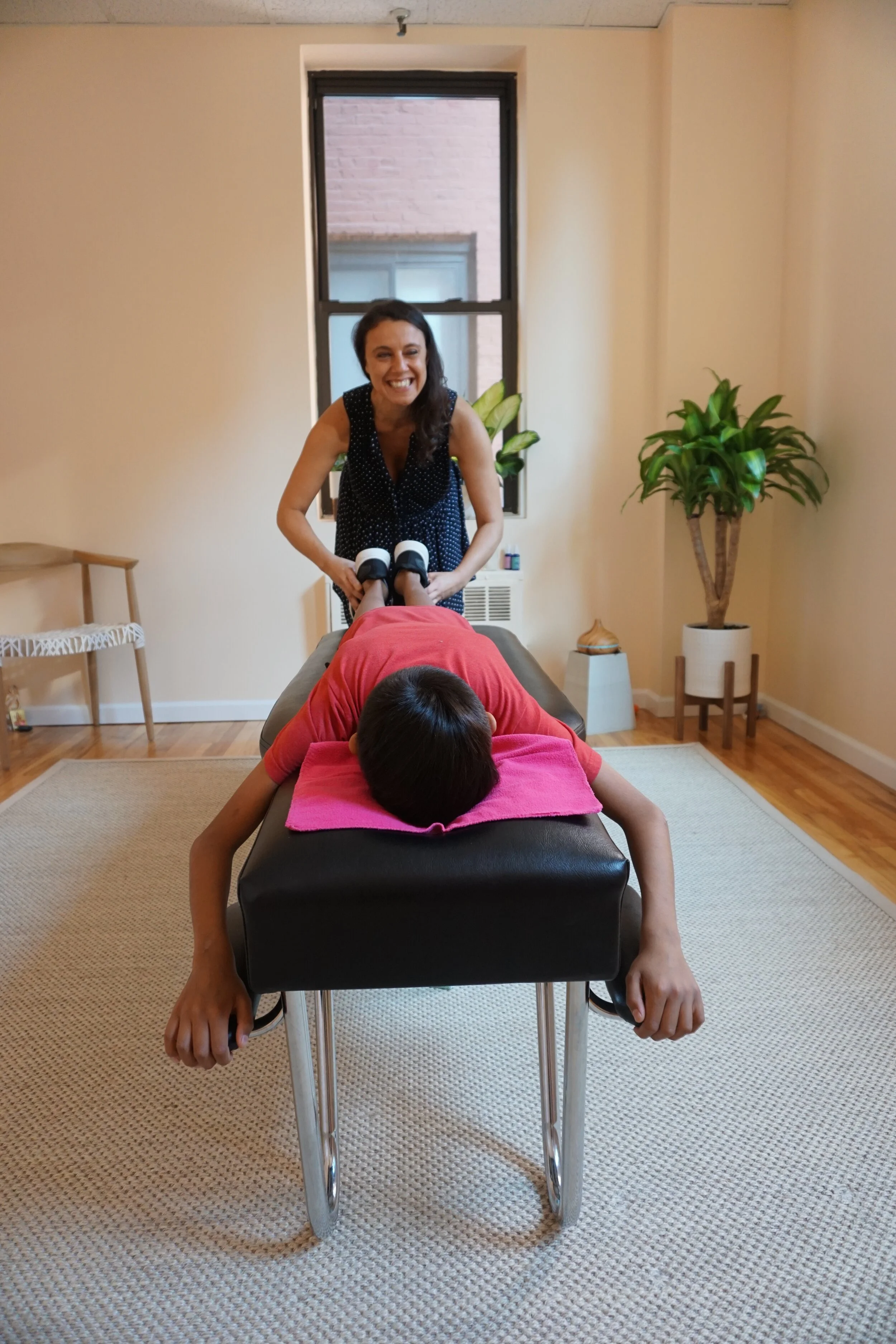
Dr Sura Corrigan
Dr Sura Devi Corrigan is a family chiropractor and passionate about sharing holistic pediatric care with newborns, babies and children. She received her doctorate in Chiropractic from Life Chiropractic West and has been in private practice in New York and New Jersey. She currently lives in Jersey City with her husband and fellow chiropractor, Brian, and their son, Jack.
References supporting Chiropractic for Infants with Reflux:
1. Alcantara J, Anderson R. Chiropractic care of a pediatric patient with symptoms associated with gastroesophageal reflux disease, fuss-cry-irritability with sleep disorder syndrome and irritable infant syndrome of musculoskeletal origin. J Can Chiropr Assoc. 2008 Dec;52(4):248-55. PMID: 19066699; PMCID: PMC2597889.
2. Alcantara J, Bryant B. Resolution of Chronic Gastroesophageal Reflux Disease and Constipation in an Infant Following Chiropractic to Reduce Vertebral Subluxation: A Case Report & Review of the Literature. Journal of Pediatric, Maternal & Family Health, Chiropractic. November 19, 2019: Pages 129-133.
3. Joel Alcantara J, Egan A. Resolution of Gastroesophageal Reflux in an Infant Following Chiropractic Care to Reduce Vertebral Subluxation: A Case Report & Review of Literature. Journal of Pediatric, Maternal & Family Health Chiropractic, Volume 2019: May 27, 2019 ~ Pages 46-54.

Baby Registry: Dr. Sura's Favorites for a Non-Toxic Nursery

I am often asked by soon to be moms what products I used for my little one and which ones are the most essential and non toxic. I wanted to share my (mostly non-toxic) favorites.
Even though non-toxic products cost more, you can always buy used from mommy social media groups, facebook marketplace, ask mommy friends for hand me downs or add it to your registry as a group buy.
Since products are always changing, I wanted to share basic guidelines I use when looking for a product:
General Guidelines to protect the health of your baby:
Organic and Natural Fabrics: clothing, sheets, towels, mattresses. Natural fabrics like linen and cotton are best.
Pure personal care items. No fragrance, petroleum ingredients, pesticide preservatives, ethoxylated ingredients, etc. This includes soap, shampoo, creams, laundry detergent, dishwasher soap and cleaning materials.
Avoid Endocrine Disruptors: such as BPA, parabens and phthalates interfere with hormones and have harmful developmental, reproductive and neurological effects.
No synthetic flame retardants: If you are unsure, ask the company if their product includes flame retardants. Flame Retardants are toxic and are often used in: bedding and mattress, car seats, clothing and stuffed toys.
Bath:
Bathrobe: Natemia (organic cotton or bamboo bathrobes) https://natemia.com/collections/organic-towels
Water Filter: Cuz’n Bath Ball Water Filter (if the water in your home is not filtered, I recommend this bath ball)
Tub: PUJ (BPA & PVC free) This was great once my son was a little older around 7 months. It is non toxic so a great choice. I didn’t find a great non-toxic one for newborns so we pretty much used the PUJ but it wasn’t supportive so we had to hold the baby the entire time.
https://puj.com/products/puj-baby-bathtub
Wash Cloths: Green Sprouts
https://greensproutsbaby.com/products/muslin-washcloths-made-from-organic-cotton-4-pack?variant=29831209320508
Shampoo and body soap: Weleda
Diapers:
Diapers: Cloth are the best for the environment. I use disposable DYPER & Honest Diapers ( chlorine-free processing, no latex, fragrance, or parabens, 100% plant-based, cruelty-free and never tested on animals and recyclable).
Diaper Changing Pad: Naturepedic ( organic cotton fabric, clear food-grade waterproof coating made from non-GMO sugarcane, non-allergenic, easy-to-clean).
https://www.naturepedic.com/organic-changing-table-pads
Diaper Bag: this is really your style preference for the brand and style….
Diaper Changing Table: Pottery Barn (if you are on a budget look for holiday sales, facebook mommy groups or marketplace for buying used).
Diaper Cream: Weleda (made with calendula and chamomile, free from synthetic preservatives, fragrances, colorants or raw materials derived from mineral oils. Dermatologically tested and highly skin-friendly even for sensitive skin). https://www.weleda.com/product/d/calendula-diaper-care-cream
Diaper Wipes: Made Of (organic, non gmo, gentle baby wipes) https://madeof.com/collections/organic-baby-products
Diaper Pail: UBBI (also love the UBBI wipes holder and UBBI diaper bags for on the go)
https://ubbiworld.com/pages/diaper-pail
Food:
Bibs: Mushie
Bottles: Joovy Boob (Glass is better and also not good to heat plastic because it releases toxic hormone disruptors)
https://joovy.com/boob-baby-bottle-glass/.
We also love the silicone Comotomo bottles but I only use the glass ones for heating.
Bottle Sanitizer: Baby Brezza (love!!)
Bottle Warmer: Dr Brown’s
Breast Pump: Spectra S1 Plus https://www.spectrababyusa.com/store/s1plus-/
Burping Cloths: Green Sprouts (organic)
Formula: If you need to supplement or are unable to breastfeed, Dr Sura loves the homemade formula in the Nourishing Traditions book. It is a game changer compared to the other formulas on the market - even the European organic ones!! You can find the recipe in that book and online here:
https://www.westonaprice.org/health-topics/childrens-health/formula-homemade-baby-formula/
Clothes:
In general, look for organic materials and natural fabrics (such as cotton and linen) are best. Newborns get cold more easily than adults. I love putting my little one in the onesies with long sleeves and that also covered the feet. Some days we went through four outfits a day and some days only one. It depends on how often you want to do laundry when deciding how much clothing and blankets to buy. This is generally the most gifted section but you may want to invest in some essentials in high quality organic fabric. You will need swaddle blankets, onesies (short sleeve, long sleeve), pants, hats, mittens, bibs and socks. Depending on the weather, you may also need a jacket or swimwear. I love the kimono onesies from Petit Bateau because you don’t have to pull it over the head - super easy to come on and off. Also, the Petit Bateau onesies are organic and made from cotton - which I love!
Sleep:
Side Sleeper: Babybay side sleeper bassinet (untreated wood, organic sheets)
https://www.babybay.us/product/babybay-maxi-tall/?attribute_color=Untreated&gclid=CjwKCAiAnO2MBhApEiwA8q0HYU0l2rKEyDhQverRnQmyjkejgva06ldu0j_jaK_mjJvlAqkQCzzS7xoCmCYQAvD_BwE
Playpen/Bassinet: Nuna Aire Sena (Our little one LOVES his Nuna Aire Sena…he started sleeping better when we used this basinet of this for his nighttime sleep)
https://nunababy.com/usa/sena-aire-mini-play-yard?color_ref=16372
Crib & Organic Mattress: You won’t need a crib for a few months if you are co-sleeping or using a bassinet. But when you do purchase it, splurge on an organic mattress and sheets if you can or look for a hand me down. The organic mattress is the most important for baby overall. I love the COCO Crib Mat https://www.purebabyandchild.com/product-page/the-coco-mat-our-crib-mattress. Avocado and Naturepedic also have great options for a baby mattress. You don’t have to spend a lot of money on the crib. Untreated wood is best. IKEA has an affordable option (Sniglar). If you are splurging on both - I love the Pottery Barn cribs for the quality.
Travel:
Baby Wearing: Solly: https://nunababy.com/usa/sena-aire-mini-play-yard?color_ref=16372 (great for newborns) or Baby K’tan Organic: https://www.maisonette.com/product/baby-carrier-organic. (the Baby K’tan offers more support for the baby as he or she grows)
Baby Carrier: Ergobaby Omni 360 All-Position Baby Carrier for Newborn to Toddler with Lumbar Support & Cool Air Mesh
Car Seat: Britax Endeavors in Otto (no flame retardants)
Stroller: Love City Mini Jogger !
Playpen & Bassinet travel: Sena Aire (love!)
MISC:
Bouncer/Play Seat: BabyBjorn Cotton with toy
Baby Nail Clippers: Safety First (it has a light which I love because you cut your babies nails while they sleep)
https://www.safety1st.com/sleepy-baby-nail-clippers-49009-s1-us-en.html
Gripe Water: ChildLife Organic Gripe Water
Play Mat: Lovevery has a great one! We love the play kits as well for developmental play.
Music: “Be Held: Lullabies For The Beloved” By Christy Nockels, “The Happy Song” by Imogen Heap
Rug: Ruggable (washable and also thick padding option great for crawling)
Spoons: Mushie
Teething: Camilia Liquid Doses, Smily Mia Penguin, Hakaaa 360 Teething Toothbrush
Tummy Time: Splashin Kids Tummy Time Mat
Other things not usually thought of for baby registry but very important for overall Mom’s healing and recovery:
Chiropractic Care: Prenatal & Postpartum
Postpartum Doula
Acupuncture
Massage
Delivery Food Gift Certificates
Would love to hear from…If you are a new momma, what products did you love most?
Jersey City Pregnancy Chiropractor, Dr Sura is passionate about supporting women during pregnancy and postpartum and helping babies ease into this world with gentle and holistic chiropractic care.

Beyond Beauty Podcast: Healing your Inner Goddess with Dr Sura

I had the wonderful opportunity to be a guest on Bridget Burrick Brown’s podcast “The Beyond Beauty Project”. Bridgett is a model, wife an mother dedicated to the uplifting women through all things regarding true beauty, womanhood and more. In this episode, we discuss healing from the inside-out, feminine embodiment, goddess practices, syncing your cycle with the moon and the rise of the Divine Feminine.

Pregnancy & Birth Hormones: Jersey City Prenatal Chiropractor
Birth hormones play an integral part in helping you birth your baby with ease and safety. Hormones play a role in both mom and baby connection and bonding during labor and after. Understand the important roles of each hormone may help you make informed decisions about your decisions before, during and after birth.
Hormones are nature’s way to help you birth your baby, bond and breastfeed. Each hormone has a special and unique role to play during the process of pregnancy and birth. Understanding and appreciating the roles of your hormones may help you better prepare by knowing how best to let the hormones do their job and prevent any unnecessary intervention with the process of your hormones working for the health of you and your baby.
Birth hormones are the chemical messengers in your body and your baby’s body designed to work together to help pregnancy, birth and breastfeeding happen naturally with as much ease and safety as possible.
Some of the special jobs of your body’s hormones include:
- relaxing the ligaments in the pelvis to help soften and open the cervix for birth
- starting your labor contractions (the muscles helping to push the baby out)
- preparing your baby for the process of labor and life outside the body
- sending the message to your breasts to make milk and to your baby to suckle
Birth Hormones:
Relaxin: In preparation for childbirth, it relaxes the ligaments in the pelvis and softens and widens the cervix.
Oxytocin: starts the contractions, the “love hormone” because helps feelings of bonding, peace, calm, trust, connection and love.
Beta- Endorphins: the hormone of pleasure, helps decrease pain during labor; a pain suppressor
Catecholamines: help you and your baby feel alert for birth, protects baby during contractions, helps prepare baby for breathing and life outside the womb
Prolactin: “mothering hormone” helps your breasts make milk
Epinephrine and norepinephrine (Adrenaline and noradrenaline): Hormones of excitement, stress and fear.
Hormones are able to do their jobs best when you and your baby are free of stress. Stress can alter how well these hormones function. The intelligence of nature promotes birth and the regulation of hormones when you and your baby feel safe and protected. An environment that is calm and private supports your hormones best. Too many interruptions, noise, medical devices, constant cervical checks, too many people coming in and out of the room, bright lights may all be viewed by the body as stressful and in turn effect the function of your hormones. It is not uncommon for the birth to slow down or even come to a halt when the body feels unsafe, uncomfortable and interrupted.
In addition when the baby is separated too soon it can cause stress for the baby effecting its temperature and sugar levels. In addition, this separation stress may make breastfeeding more difficult. It is best to delay routine examinations for the baby and allow the crucial bonding time, preferably skin to skin, with mother and baby.
Can medical intervention such as tests, treatments, drugs, monitoring affect birth hormones?
Yes, medical intervention when an emergency situation is not warranted may work against the birth hormones and slow or stop the birth. If there is a serious problem, tests and treatments may be necessary for the safety of you and your baby. Sometimes, these tests, treatments and drugs are used when there isn’t a problem and to help speed up the labor even though the mom and baby are progressing at a steady pace. In these cases, interventions interfere with the important role of the hormones and may slow, delay or even halt the birth. If it isn’t an emergency situation and there isn’t a serious problem, it is best to ask questions to see if the intervention is really necessary and to know your options before you agree to something that may interfere your process.
Angela’s story explains how the amazing hormones of birth guide you and your baby through labor, birth, and your first days getting to know each other.
Angela’s due date was a week away. She was tired of being pregnant. She felt heavy and awkward. She ached. It was hard to find a comfortable position to sleep. But Angela remembered what her maternity care provider told her: In a healthy pregnancy, the best way to know that your baby and your body are ready for labor and birth is to wait for labor to begin on its own. So Angela decided to be patient. She tried to get as much rest as she could and enjoy her last weeks—hopefully days—of being a twosome with Rob. When her due date came and went, it was harder to be patient. But Angela and her baby were still healthy and her care provider said it was safe to keep waiting for labor to start. There was no medical reason to induce labor—that’s trying to start labor with medicines or procedures. Angela’s maternity care provider told her, “Your hormones are doing a lot of work right now. They’re getting you and your baby ready to go through all the big changes that happen in labor and while you give birth. They may be getting you ready to breastfeed, too. If we induced your labor now, we’d be cutting that work short. So you may not be as fully prepared for labor, birth, and breastfeeding as you will be if you wait. And if your body isn’t ready for labor, induced labor may lead to problems.” Angela decided to stick to her plan to wait. One night, when Rob came home from work, she was cleaning out the refrigerator. She smiled and told him, “I had such a burst of energy today! I thought I’d finish some chores before Bean gets here.” “Bean” was the nickname Angela and Rob gave their baby. Later that night as they got ready for bed, Angela asked Rob to rub her lower back. “Maybe you pulled a muscle,” he said. “Maybe,” she sighed, “but it feels more like when my period starts. I have these dull, cramps that come and go.” Realizing what she said, Rob and Angela looked at each other. Rob grinned and suggested, “I think maybe we should time those cramps!”
Going to the hospital:
The next morning, Angela’s contractions were strong and less than five minutes apart. She checked in by phone with her provider, who said it would be a good time for her and Rob to go to the hospital. By the time they arrived and met the nurses, they were pretty excited. But when Angela got to her room, she noticed that her contractions were slower and weaker than they were at home. Was this a false alarm? The nurse explained, “That happens a lot when women first get to the hospital. Getting used to a new place is a little stressful. And stress can interrupt the hormones in your body and slow your labor. Your contractions will get stronger again when we leave you alone to settle in.” When Angela and Rob had some privacy, they turned the lights down and listened to their favorite music. Angela relaxed, and sure enough, her contractions got stronger and closer. Between contractions, Angela said, “Thank goodness we’re in a place that knows how to support the changes going on inside me right now.” Rob looked at her and smiled. “I thank you for that. You’re the one who did the research to find this care. And it’s paying off.” Angela wondered out loud what might have happened if the nurses didn’t understand the importance of giving them peace and quiet. “What if I had to get an IV and other things I don’t need right away just because of hospital rules?” Rob laughed. “Not with the way you feel about needles.” “I know!” Angela frowned at the thought. She really wanted to avoid a high-tech labor and birth. “Rob, I know I’ve said this a hundred times, but as long as there’s no problem, I want to follow Mother Nature’s birth plan. No medical stuff. But if there’s a real problem, then, yeah, I want modern medicine working for us. Got it?” “Got it,” he assured her. “Okay.” Angela sighed, “Now I’m going to stop thinking so much and just relax and let my body do its thing.” She leaned back into Rob’s arms and a good, strong contraction started.
Dealing with labor pain:
Angela wasn’t sure how she would handle labor. She didn’t rule out having an epidural if the pain got too hard to manage. (An epidural uses a small needle to put pain medicine around the spinal cord.) But she hoped she’d be able to cope using the simple things she and Rob learned in childbirth classes. Her care provider and the hospital nurses were glad to help them try what they learned. Angela wanted to stay off her back and move around to cope with pain and help keep her labor going strong. She was free to move around because she wasn’t hooked up to an IV or machines to check her contractions and the baby’s heart. The nurses could check those things from time to time without wiring Angela to machines. Slow dancing with Rob helped the most. With his arms around her, she could hear his heartbeat. She felt so protected and close to him. The contractions got stronger and they hurt— no doubt about that—but she felt she could handle it. Angela liked using the shower during labor. Leaning against the wall with the warm water running down her back, she let her mind float away. She felt energy flowing through her. She imagined each contraction bringing her baby closer and closer to her arms. Angela also liked that the nurses didn’t do a lot of vaginal exams. They only did exams when they needed information to make a decision about care. That meant that Angela and Rob had more privacy. Labor was hard work! To keep her energy up, Angela could snack and drink as she wanted. All these simple things helped her feel calm and in control, and they let her birth hormones do their work.
Getting to the end of labor :
After a few hours, Angela began to feel anxious and fearful. “It’s too much,” she cried to Rob. “The contractions are so strong and close together. Make it stop!” Rob called the nurse. She did an exam to find out if Angela’s cervix [SIR-vix] was fully opened and ready for her to start pushing. “You’re really close,” the nurse said. “We can still give you an epidural, but it won’t be long until you’re ready to push. I know that you wanted to try to do this without an epidural. What do you think?” Rob spoke first. “You’re doing so well. I know you can do this, but it’s up to you.” Angela took a big breath and said, “I can do this.” Rob took her hand and said softly, “We’ll take it one contraction at a time.” Angela looked at him, “Deal. But you’re taking every other one from now on!” They all laughed. Angela had made her decision. She was already feeling better, so the nurse gave them privacy. A few minutes later, Angela felt her belly muscles tighten. She was making grunting sounds and bearing down without trying. Rob called the nurse back in. She did a quick exam and told them, “Your cervix is fully open and your body is telling you to push. Your baby is on the way!” That was good news to Angela. She felt a surge of energy. She was excited, alert and ready to start working on getting her baby into her arms.
Breastfeeding and bonding after birth The moment of birth was coming. Angela’s care provider was with her now. “Don’t push. Just breathe. Let the contraction do the work,” she said. Angela felt her baby’s head come out. Soon after, the baby’s body was out, too. He took his first breath of air and let out a little noise that made everyone smile. Seconds later, the nurse placed Angela’s son on her chest with his skin against hers. The nurse knew that snuggling skin-to-skin with his mother would calm him quickly and help both prepare to breastfeed. Angela thought his little body felt wonderful against hers. She watched him blink his eyes and stare into her face. “Hello there, Bean,” she whispered. “Welcome to the family.” Rob felt full of emotion watching Angela with their son. Then he laughed, “Angie, I don’t think we should call him Bean anymore!”
Angela’s care provider reminded her that the placenta still needed to come out. That’s the organ that brought food and oxygen to the baby in the uterus. Within a few minutes, Angie felt a mild cramp. With one push, the placenta slipped out. Someone said something about “very little bleeding,” but Angela hardly heard because she was so excited to hold her baby. “Look how he’s opening and closing his mouth and turning his head,” she laughed. “He looks like a baby bird wanting dinner.” “That means he’s ready to breastfeed,” the nurse explained. She helped Angela get comfortable so she could offer her nipple to her baby. After a couple tries, he opened wide, latched on, and began to suckle strongly. “This little guy is nursing like a champion,” said the nurse. Angela was full of joy. “It was hard, but it was s-o-o-o worth it!”
Enjoying day 1:
After nursing for the first time, Angela and her baby were relaxed and sleepy. They had been together for only a couple of hours, but they were already deeply in love. They stayed together the whole time they were in the hospital. Angela breastfed whenever the baby wanted. This close contact helped their hormone levels stay in balance for successful breastfeeding and a close, loving bond. That evening, Rob watched his new family sleeping. He knew being first-time parents would be hard. But he also knew that birth hormones helped them get off to a strong start. He was grateful that Angie found maternity care to help make sure of it!
What where the hormones doing in Angela’s Story:
In the last weeks of pregnancy, hormones have been getting Angela and her baby ready for the big day. The amount of prolactin in her body has been increasing. Prolactin was likely behind Angela’s “nesting behavior”—that sudden desire to get things in order at home. Prolactin is also preparing Angela’s breasts to nurse her baby. Angela’s body has been getting ready to use oxytocin, too. This hormone will make her uterus contract during labor. That’s why she was feeling those dull cramps. Her uterus is warming up for stronger contractions later on. Strong contractions can be pretty uncomfortable. So, as Angela waits for labor, her body is making beta-endorphins. These hormones relieve pain and reduce stress during labor. Waiting for labor to begin on its own helps ensure that all of these preparations have taken place.
As Angela’s contractions got stronger, her body’s beta-endorphins helped her cope with pain. These hormones also helped her get into the focused “in the zone” mental state she felt in the shower. Oxytocin made Angela’s contractions get stronger. But it also increased the calm, close feelings she had for Rob. That’s why it’s called “the love hormone.” After birth, oxytocin will also help Angela and her baby bond with each other and enjoy breastfeeding. If Angela has an epidural later on, it could disturb her birth hormones. Her oxytocin levels could drop. That’s because epidurals numb the nerves that tell the body to make oxytocin. Without enough oxytocin, her labor might slow down. This is why epidurals increase the chance that a woman will need a drug known as Pitocin to keep labor going. But this artificial form of oxytocin doesn’t create the feelings of calm and connection that Angela enjoyed during labor. And it doesn’t help mothers and babies bond like natural oxytocin does.
During each part of labor and birth, hormones will likely do exactly what you and your baby need—as long as your care doesn’t disturb the way they work. At the end of labor, a flood of catecholamines made Angela’s contractions stronger to move the baby out. That helped open her cervix all the way and gave her the energy to push. This is called the “transition phase.” Some women, like Angela, feel some anxiety and fear from the sudden rush of hormones. But those emotions usually go away quickly when it’s time to push. At that point, the catecholamines help women feel ready for action—just what Angela needed for the task ahead. It’s important to know that epidurals reduce both catecholamine and oxytocin levels. If Angela had chosen an epidural, pushing the baby out may have been harder and taken longer. Angela’s baby had an increase in catecholamines, too. These hormones increase blood flow to the baby’s brain and heart. That helps protect the baby’s health during the strongest contractions. Catecholamines also get the baby’s lungs ready to breathe after birth.
Keeping Angela and her baby together cuddling and breastfeeding had huge benefits for both of them. The baby was born alert and ready to suckle because of the catecholamines in his body. But catecholamines cause excitement, and too much excitement isn’t good for anyone. Putting the baby on Angela’s chest, helped catecholamine levels fall quickly for both of them. The cuddling also increased their oxytocin levels, which added to healthy feelings of calm and closeness. Oxytocin also opened blood vessels in Angela’s chest, which helped keep the baby warm. And it kept Angela from bleeding too much after the placenta came away from the uterus. Breastfeeding soon after birth also helped increase oxytocin and beta-endorphin levels in Angela and her baby. These hormones strengthened their feelings of pleasure from being close, which helped them enjoy breastfeeding. Each time a baby breastfeeds, some prolactin enters the mother’s bloodstream, too. Prolactin is part of the reason Angela felt such a strong urge to care for and protect her baby. This hormone also reduces anxiety and tension—an important benefit for anyone caring for a newborn!
How can I find care that will support birth hormones? Angela’s story shows that it’s most important to carefully choose who will provide your care and where you’ll give birth. You want to make sure your care includes:
Doing simple things to reduce stress, before labor (such as prenatal chiropractic care, yoga, meditation, acupuncture) and during labor by giving yourself privacy and quiet
Avoiding tests, drugs and other treatments that aren’t medically needed
Keeping you and your baby together after birth when you’re both healthy
Look for a doctor or midwife who uses medical tests and treatments only if:
You or your baby has a serious problem and tests or treatments are important for your health and safety.
You have a problem that’s not urgent, but simple approaches aren’t helping enough. For example, a doctor or midwife should encourage massage, hot showers, changing positions or other simple things for pain relief before suggesting medicine.
Midwives usually have training and experience working with birth hormones. Some doctors have this training and experience, too.
You can’t be sure that the doctor or midwife you choose will be with you when you go into labor. So, when you find someone who is a good match for you, ask if they work with other care providers who offer the same kind of care. You may want to talk with these other people, too.
Keep in Mind: Questions to ask a doctor or midwife:
How do you support the natural hormones that help my baby and me through labor, birth, breastfeeding and bonding?
What do you do to avoid things that might disturb birth hormones?
What, if any, medical treatments or monitoring do you regularly use for all women during labor and birth? (If a doctor or midwife recommends medical treatments for all or most women, you may want to look for someone else.)
When would you recommend induced labor and why?
When would you recommend a cesarean and why?
Tips for finding a place to give birth: Look for a place that:
Doesn’t require all women to have IVs
Will let you move around during labor and help you try simple things to stay comfortable
Will put your baby skin-to-skin on your chest as soon as possible and keep you together after birth
Will help you breastfeed as soon as possible after birth If you already have a care provider who will work to support your birth hormones, ask advice about places to give birth. Look at the hospital’s or birth center’s website to learn about their approach to care during labor and birth. Birth centers usually support birth hormones. Talk with other women about their experiences in the hospitals and birth centers in your area. Call or visit hospitals or birth centers and ask questions about their style of care.
Questions to ask: Do all women in labor have to have an IV?
Will I be free to move around during labor, or will I be hooked to machines?
Will I be able to snack and drink during my labor?
How will you help me stay relaxed and comfortable during my labor—for example, will I be able to take a shower or bath, or use a birthing ball?
If my baby and I are healthy, will you put the baby on my chest, skin-to-skin, right after birth?
What will you do to help me get breastfeeding started?
If I have a cesarean birth, can my baby stay with me, skin-to-skin, in the recovery room?
Other very important tips:
Take childbirth classes. Look for classes that explain:
Where is best for me to give birth - home, birthing center or hospital? All women have different preferences and reasons for choosing the environment that helps them feel the safest and more prepared for birth. I encourage all moms to be to look at all options and to make a decision based what is best for her and her baby.
Possible benefits and harms of care options : Drug-free ways to cope with the pain, effort and emotions of labor
Consider hiring a doula. A doula is a woman with special training to help women get the care they want during labor and childbirth. She can help you feel more confident, comfortable and relaxed. That may help reduce the need for medicines and procedures that can upset birth hormones.
If you and your baby are healthy, wait for labor to start on its own. During the first part of labor, stay in touch with your care provider about staying home until your labor contractions are strong and regular. Spending less time in labor at the hospital may reduce the chance you’ll have unneeded medicine or procedures. To help you and your partner feel confident about staying home, consider hiring a doula who will come to your home and remain with you until after your baby is born at the hospital.
At the hospital or birth center, make your room feel like your own peaceful, private space.
Here are some ideas:
Wear your own clothes or pajamas and bring your own pillow.
Bring your favorite music and headphones for listening.
Keep the lights low and the door closed.
Put up a sign asking people to knock softly before entering. If a nurse or your care provider suggests tests, treatments, or limits your movement or drinking during labor, ask:
Why are you making this suggestion?
What are the pros and cons of this suggestion?
Are there other things to try? If so, what are the pros and cons of those options?
What are the pros and cons of watching and waiting to see what happens? Remember that you have a right to clear information about your care options. You have a say in what happens to you and your baby. If there’s a medical problem, DO LISTEN to what your care providers tell you. Sometimes treatment is necessary to keep you and your baby safe. Even though it may affect your birth hormones, it may be the best approach. If you need medical treatment, there are things you can do to get the most benefit from your hormones:
If you need to have an induced labor, ask if it’s safe to wait until your cervix is soft and ready for labor. If your cervix isn’t ready, induced labor may be more likely to end in a cesarean birth.
If you need to plan a cesarean birth, ask if you can wait for labor to start before you have surgery. This helps you and your baby benefit from the hormones you make at the very end of pregnancy.
Ask to have your baby put skin-to-skin on your chest as soon as possible—even if you’ve had a cesarean birth. And ask to have your baby stay with you during the rest of your hospital stay.
If your baby needs to be in the special care nursery, touch, hold, breastfeed, and talk to your baby as much as possible. Ask the care providers about holding your baby skin-to-skin against your chest. Be patient during labor, birth, and the days after. Your body does a lot of work to have a baby. Give it the time it needs for a safe, healthy vaginal birth. In the days after birth, focus on getting to know your baby, adjusting to the many changes, and getting rest. You may need time to get used to breastfeeding, even if you’ve done it before. Breastfeeding is always new for your baby. So be patient if your little one doesn’t catch on right away. But don’t delay if you need help from a breastfeeding expert. Early help can keep little problems from becoming big ones.
Source: The following information comes from “Childbirth Connection” booklet in partnership with a report by Dr. Sarah J. Buckley, Hormonal Physiology of Childbearing: Evidence and Implications for Women, Babies, and Maternity Care (Washington, DC: Childbirth Connection Programs, National Partnership for Women & Families, January 2015). The full report, this booklet, and related materials are available at: ChildbirthConnection.org/HormonalPhysiology
—————————————————————————————————————————————————————-
Dr Sura, Jersey City Chiropractor, is passionate about helping children, women and families discover their natural ability to heal and be healthy. She is in private practice at NALU Chiropractic specializing in women’s health and wellbeing (fertility, pregnancy, postpartum and motherhood). Dr Sura offers the Webster Technique and loves to support the women in preparation for the birth of their baby and journey into motherhood. In addition, she loves helping support the growth and development of babies and kids through gentle pediatric care. For more info, contact us sura@naluchiro.com.

Fertility & Chiropractic
As a holistic doctor, every day in practice I have the opportunity to support families dealing with fertility challenges. Some are unable to get pregnancy and some struggle with repeated miscarriages and heartache. Supporting a family during this time is multi-faceted as we must look at the causes and make changes to help the couple better prepare for fertility, pregnancy and parenthood.
According to the CDC, about 6% of married women aged 15 to 44 years in the United States are unable to get pregnant after one year of trying (infertility). Also, about 12% of women aged 15 to 44 years in the United States have difficulty getting pregnant or carrying a pregnancy to term.
What Causes Infertility?
1. Well-documented causes of infertility include:
ovulatory problems such as Polycystic Ovarian Syndrome
sperm disorders
endometriosis, adhesions or tubal disease
abnormal cervical mucus
uterine abnormalities (fibroids)
unexplained sub-fertility; including STD’s (gonorrhoea, chlamydia), scar tissue from previous mumps or appendicitis, cancer drug therapy, congenital issues, lifestyle and oxidative stress
infrequency of sex
2. Choosing to have our children later
Researchers at the University of Edinburgh determined that by the time women are 30 years old, only 10-12% of their non-growing follicles (NGFs) remain and by the age of 40 years only 3% of the NGFs remain. What this means is there are only a small number of follicles remaining that are healthy and viable for conception.
3. Lifestyle factors that may influence the level of insulin in the bloodstream (decreasing the production of sex hormones binding globulin- leading to higher amounts of circulating free testosterone) creating challenges with fertility.
Stress, Alcohol, Environmental Hormone Disruptors - impact insulin levels
Diet
The good news here is that the more couples learn about these factors in some cases they may improve their chances of conceiving naturally by being proactive and making changes to their lifestyle.
The opportunity with fertility challenges is for the couple to come together and create an active plan to address the health on all levels. Many couples are already extremely healthy and conscious in a “clean” and holistic lifestyle. Even so, because fertility challenges are so diverse and complex, the couple has an opportunity to commit even more fully to their emotional, mental and physical health and seek providers that may help them.
Chiropractic helps support fertility by helping the body heal:
1) Stress: Chiropractic addresses stress in nervous system that may be causing a person’s body to be in a state of fight, flight or freeze with an inability to relax. By helping the body harmonize the person is better able to adapt to stress and move into a state of ease and relaxation (activating the parasympathetic nervous system) and supporting fertility and pregnancy.
2) Brain and Body Communication: misalignments in the body can alter the function of nerves and their ability to communicate with organs and systems in the body clearly. Chiropractic addresses these disconnects (subluxations) through gentle adjustments that help nerves heal and function properly; supporting healthy communication with the reproductive system and the rest of the body.
3. Mind, Body & Spirit Connection: As the body heals and aligns naturally, a person may experience greater feelings of wholeness and positive emotions helping prepare the woman for fertility, pregnancy and motherhood.

Jersey City Family: What sugars are best for the family?
It is so obvious the effects of sugar with children. You can immediately see the difference in how they act once they have the sugar high and then ultimately the sugar crash. Eating artificial and refined sweeteners wrecks havoc on the body leading to candida overgrowth in the gut, weight gain, depression, sugar addiction, decreased immunity, diabetes, high cholesterol and heart disease.
So leads us to the big question: how do I sweeten treats for my family without the using artificial and processed sugars? Simple - using natural sweeteners that are easily for the body to use and can even contribute to the overall health of the body.
** Best sources of sweeteners for you and your family:
coconut palm sugar
date sugar
dried fruit
fruit - organic
honey - raw (local is favored)
monk fruit
Natural sweeteners are easier for your body to digest and provide nutrients, vitamins and/or minerals your body can use for good.
Artificial Sweeteners (artificial chemicals - not good for the body):
acesulfame potassium
asparatame
neotame
saccharin
sucralose
Processed Sweeteners:
barley malt
brown sugar
cane sugar
carob sugar
corn syrup
dextrose
erythritol
evaporated cane juice
fructose
glucose
high fructose corn syrup
juice concentrate
maititol
malt syrup
maltodextrin
refiner’s syrup
rice syrup
sorbitol
sorghum
sucrose
sugar
The general rule is best to avoid any processed sugar especially made from GMO, corn or cane. To learn more about how best to support the overall health and wellness for your family, email us sura@naluchiro.com to schedule a consultation today.
————————————————————————————————————————————————————
Dr Sura, Jersey City Chiropractor, is passionate about helping children, women and families discover their natural ability to heal and be healthy. She is in private practice at NALU Chiropractic specializing in women’s health and wellbeing (fertility, pregnancy, postpartum and motherhood). In addition, she loves helping support the growth and development of babies and kids through gentle pediatric care. For more info, visit us www.naluchiro.com.

Webster Technique and Pregnancy Chiropractic
The Webster Technique is very gentle, safe and effective way to support the optimal fetal positioning of a baby during pregnancy and the overall wellbeing of the mom to be. Although very beneficial in breech, transverse and posterior baby positioning it may also support the proper alignment and nerve function of all pregnant mothers.

Pictured here is the precise release of the round ligament during the webster technique for pregnancy.
The Webster Technique is a type of chiropractic adjustment used during pregnancy to support the optimal position of the baby in utero. The position of the baby in utero matters greatly. A baby in optimal fetal position is associated with greater ease during the birth process. However, the opposite is also true. A baby in a poor position (breech, transverse or posterior) is associated with longer births and greater rise ok intervention, injury and trauma.
The Webster Technique was developed by Dr Larry Webster DC to help correct the alignment of a pregnant woman’s sacrum and remove any interference in the nerve flow to her uterus. The technique is very gentle, precise and safely evaluates and corrects any imbalance in the sacral and pelvic region of a mom to be.
Although the Webster Technique is beneficial for all pregnant women, studies have shown it’s effectiveness for pregnancies in the breech, posterior or transverse position. Very often a baby in a less than optimal fetal position will naturally move into the optimal fetal position once the misalignment in the sacrum is corrected and the nerve flow to the area is fully restored through prenatal gentle adjustments. According to a study published in The Journal of Manipulative and Physiological Therapies in 2002, found the Webster Technique had an 82% success rate of supporting the correction of a breech baby position.
In addition to the ease of a smoother labor, optimal fetal position generally supports the overall wellbeing of both mother and baby. To learn more about how the Webster Technique may help support your pregnancy, please contact us to schedule your appointment.
—————————————————————————————————————————————————————-
Dr Sura, Jersey City Chiropractor, is passionate about helping children, women and families discover their natural ability to heal and be healthy. She is in private practice at NALU Chiropractic specializing in women’s health and wellbeing (fertility, pregnancy, postpartum and motherhood). Dr Sura offers the Webster Technique and loves to support the women in preparation for the birth of their baby and journey into motherhood. In addition, she loves helping support the growth and development of babies and kids through gentle pediatric care. For more info, contact us sura@naluchiro.com.

Holistic Remedies for Morning Sickness during Pregnancy

Although there is no definitive answer as to why some women get nauseous during pregnancy, we do know that the body is intelligent and the feelings of feeling nauseous are part of the body’s self regulating mechanisms to the the hormonal and physical changes occurring in a woman’s body. I often encourage women experiencing these symptoms to use it as an opportunity to slow down more and pay more attention to your needs. In addition, here are some holistic, natural remedies that may help you…
1. Eat small amounts of food throughout the day.
This means a small portion of food everyone couple of hours. Consistent, light snacking will prevent blood sugar levels from plummeting (helping to prevent nausea). Try eating lightly when you feel nauseous and see if that helps alleviate symptoms.
2. Get more sleep and rest.
Having naps where possible, or going to bed early — ensuring that you get extra-sleep — can make the world of difference to how you feel.
3. Get adjusted by your chiropractor.
This enables your body to be as healthy as it can be during pregnancy. Adjustments allow your body’s nervous system i.e. your body’s computer to carefully balance your physical and hormonal needs at this crucial time.
4. Ginger
Try some fresh ginger tea – it’s a life-saver. Buy some ginger, cut a few slices, add hot water and a little honey.
5. Add more vitamin B6 in your diet.
Try increasing your vitamin B6 intake throughout your day. Vitamin B6 can be found in:
sweet potato
bananas
currants
dried apricots
prunes
sunflower seeds and walnuts
soya beans
chicken
turkey
wholegrains
brewer’s yeast
In both my personal and clinical experience I have found that nutritional guidance from a qualified holistic nutritionist or naturopath should play an integral role in pregnancy. Seeing these specialists, at least once early in your pregnancy (perferrably prior to conception), will help clarify if you have any nutritional deficiencies which may impact your capacity for optimal health during pre and post-birth.
7. Self-care: honor your needs.
Choosing to acknowledge and honor your physical needs during pregnancy is where the true fundamentals of self-care begin.
If you would like to schedule a prenatal consultation, please call us 646-535-0710 or email sura@naluchiro.com.
Source: “Well Adjusted Babies” By Dr. Jennifer Barham-Floreani DC
Top 10 Reasons Parents Bring Children to the Chiropractor
Top ten reasons parents bring children to a chiropractor to get adjusted.
Top 10 Reasons Parents Bring Children to the Chiropractor

To encourage good neural plasticity (brain and nerve development)
To support the child’s overall health and wellbeing
To help strengthen their child’s immunity and potentially reduce the incidence of colds, ear aches, and general illness
To assist with colic and breastfeeding issues
To help with asthma and allergies
To encourage good spinal posture
To help improve their child’s ability to concentrate
To assist with behavior disorders
To help alleviate bed-wetting and sleep disorders
To help alleviate constipation and digestive issues
and more! If you would like to see if chiropractic can help your child, please feel free to contact us to schedule a consultation 646-535-0710 or sura@naluchiro.com.
Source: “Well Adjusted Babies” by Dr. Jennifer Barham-Floreani DC
Best Chiropractor in Jersey City
Specializing in Women’s Health & Wellbeing, Fertility Wellness, Pediatric Care, Pregnancy and Postpartum.
Holistic Women's Health
I remember the first time I learned that the body could heal itself naturally. I was ten years old and I had a headache that wouldn’t go away. I had already taken several doses of over the counter pain killers. I went to my father and told him my headache wouldn’t go away even though I had taken medicine several times. He was a doctor and although he was trained with a medical approach (outside-in) he also deeply understood the importance of natural healing. He told me to sit down and he placed his hands on the area between my neck and shoulders. He pressed down really hard and in small movements helped me release the tightness and tension in my body. After about a minute or two he stopped and my headache was gone.
My next memory was when I was in my tenth grade biology class. My teacher was a scientist from the Caribbean. She said, “I don’t understand you, Americans. The body naturally heals itself and you purposely stop the process. A runny nose, cough and sneeze are all ways the body naturally gets the sickness out of the body. The fever burns away the infection. But Americans instead of allowing the body to get the sickness out of the body, you take medicine to stop the runny nose, sneezing, coughing and fever. It doesn’t make sense.” I remember so clearly when she said that it made perfect sense to me. Something inside of me knew that she was speaking truth.
It wasn’t until 10 years later that I discovered Chiropractic and the benefits of healing from the inside-out. At first, I just wanted my pain to go away. What it took me some time to deeply understand is that my pain had a purpose; a reason for being, and it was up to me to make the changes to better support my emotional, mental and physical health. Chiropractic gave me the opportunity to get connected and clear enough on the inside to make these changes.
Chiropractic was the doorway I was in search of for years not knowing the peace, healing and goodness was inside of me all along. I love sharing this message with people on their first visit because I see something light up inside of them - knowing it is true. It is empowering. It tells you that YOU have everything you need inside of you. YOU are the expert, the doctor and the healer.
Some people don’t want this responsibility. They would rather give up their power to someone or something else. Some people rather blame something or someone else outside of them. Some people are afraid of change. Some people are afraid of their power. Some people don’t believe that they could be that wise, pure and good. Other people have had enough and want to deeply and truly heal and awaken to their authentic being-ness. These are the people that are ripe to experience the benefits of holistic chiropractic care. To be honest, I have been all these people. But it wasn’t until I took responsibility and deeply wanted to heal that I unlocked the door to my own healing potential and happiness.

Dr. Sura is a Chiropractor specializing in Holistic Women’s Health and Wellbeing. She is passionate about supporting women in connecting to their own healing power and awakening to greater joy, happiness and peace in their body and life. Dr. Sura is in private practice in New York City and Jersey City. To learn more, please visit us at www.naluchiro.com

Birth Language
With great love and care, we begin to examine the words of birth and begin to replace the words with meanings that empower us and reflect the true magnificence of who we are as women and how powerful birthing babies truly is - no matter how the baby is born.

The language a woman uses during her pregnancy and birth is important for her empowerment. When you hear the word “contraction” how does your body feel? Does it open up like a flower blossoming new life or does it contract and shut down in defense? What words come to mind when you hear the word “contraction”? When I ask women these questions they will often say things like they feel their body shutting down and the words “pain” and “fear” come to mind. The actual word contraction means to “make small” and we all know there is nothing small about birth and motherhood.
I encourage the pregnant mommas at Nalu to use words that support the birth they would like to have. For example, instead of contraction what if used the words “sensation” or “surge”? Words that invite your power and ability to birth to your baby. A contraction is feeling the power of your muscles squeezing together to help push the baby out. The contraction is really your power in action. It is the power surge of birth and life.
Recently I had the incredible honor to care for a doula when she was starting to have surges. I shared with her what I knew she probably already knew but as a gentle reminder that the language of birth is important and contractions can also be called surges or rushes. She told me that she calls them waves. She told me her mother taught her growing up near the beach that you never turn your back on a wave. You always face it. It was such a powerful share and touched me deeply. We then practiced facing the waves of her body by breathing with the waves, allowing to be carried by them and the power of birth.
Here is what America’s midwife had to say about using the word rush instead of contraction:
“I felt free to change some of the language surrounding birth as a way to help women cope with labor pain. I have a master’s degree in English and was aware of how language can condition our response to a physical/emotional/spiritual process such as labor. I began to use the word “rush” instead of contraction. Why use a word that suggests tightness and hard muscles when successful labor will require expansion of the cervix.” ~ Ina May Gaskin, “Ina May’s Guide to Childbirth”
With great love and care we begin to examine the words of birth and begin to replace the words with meanings that empower us and reflect the true magnificence of who we are as women.

Elderberry Syrup Recipe
What to do when you have a cold and flu? My family and I make sure to get adjusted a lot and we love elderberry syrup. Elderberries naturally contain vitamins A, B, and C and stimulate the immune system. Several recent studies are also showing the immune-boosting power of elderberries; sometimes even lessening cold and flu duration in half, and in many cases eliminating symptoms within 48 hours. The recipe that we love the most is below:

Elderberry Syrup is a favorite natural immune boost
Ingredients
3½ cups water
2/3 cup dried organic black elderberries (1/3 cups fresh or frozen)
2 tablespoon grated oragnic ginger
1 teaspoon organic sweet cinnamon
½ teaspoon ground cloves
1 cup raw, local honey (For children under 2 years of age, it is recommended that honey is replaced with organic maple syrup or agave. No honey for children under 2 years of age.)
Instructions:
Pour the cold water into pot and add the elderberries, ginger, cinnamon, and cloves.
Bring to a boil and then lower the heat and simmer for about 45 mins.
Remove from heat, cover and have it to sit for about 45 minutes to 1 hour until the liquid has reduced by almost half.
Once cool enough to be handled, mash the berries carefully.
Pour through a strainer (a cheesecloth or undyed cotton muslin bag). Be careful as the liquid may be hot still.
Discard the elderberries/herbs (you may want to compost) and let the liquid cool to room temperature.
When it is no longer hot, add the honey and stir well.
When the honey is well mixed into the elderberry mixture, pour the syrup into a sterilized glass/mason jar.
Store in the fridge.
Instant Pot:
9 minutes on high pressure. Add all ingredients except the honey to the instant Pot. Then strain and cool to room temperature. Add the honey and store in sterilized glass jar.
My family gets chiropractic care regularly and takes about teaspoon or two of this syrup daily or every few hours when our immunity needs extra support (depending on what we are going through). As always, this is not personal medical advice and we recommend that you talk with your doctor.